
CenterPoint Crossbow Parts
CenterPoint rotates its catalogue quickly, and models that were everywhere a few seasons ago are no longer listed on the manufacturer's site. The crossbows themselves are still in the field and still need parts. This page covers what actually wears on a CenterPoint, what you can replace yourself, and what needs a shop.
What Wears First, in Order
Crossbow parts do not fail randomly. There is a fairly reliable order:
| Part | Replace yourself? | Notes |
|---|---|---|
| Bolts | Yes | Consumable. Inspect for cracks before every session |
| String and cables | No - needs a press | See string lengths by model |
| Rail lube / string wax | Yes | The cheapest thing that extends string life |
| Bolt retention spring | Yes | Small part, easy to lose, keeps the bolt seated |
| String dampeners and stops | Yes | Rubber perishes, especially in storage |
| Scope | Yes | See scopes and yardage lines |
| Cocking device | Yes | See cranks and rope cockers |
| Limbs, cams, trigger assembly | No | Manufacturer service or a qualified shop |
Everything in the first group is a maintenance item you should expect to buy. Everything in the last group is a reason to stop shooting the bow until it is looked at.
The Rail Is the Part Nobody Thinks About
The rail is where the string travels every time you shoot, and a dry rail destroys strings faster than shooting does. Rail lube is a few dollars and it is the single highest-return maintenance item on a crossbow.
What to look for: the rail should be lightly lubricated along the string path, not slathered. Too much lube collects grit, and grit turns the rail into an abrasive. If you can see a groove worn into the rail, or the surface has gone rough, that is a shop job rather than something more lube will fix - a damaged rail will keep eating strings no matter how many new ones you fit.
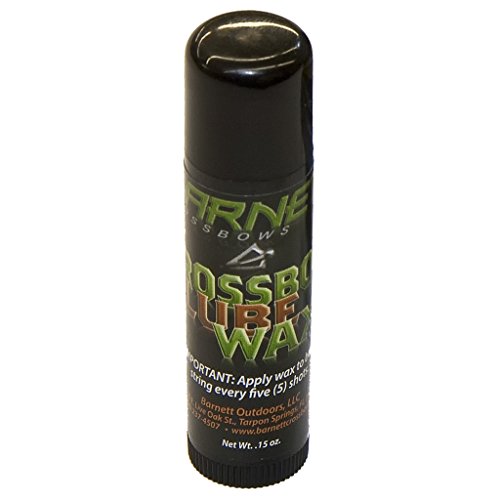
Wax goes on the string itself, not the rail path, and the two products are not interchangeable. Most maintenance kits include both for that reason.
Popular options on Amazon
Prices change often - check the current price on Amazon.




Anti-Dry-Fire and the Retention Spring
CenterPoint fits anti-dry-fire mechanisms to its compound models, and advertises a ball bearing retention spring design. Both exist to deal with the same failure: a bolt that is not fully seated against the string.
The retention spring is the small leaf that holds the bolt down on the rail. It is a genuinely small, genuinely losable part, and a bent or missing one means the bolt can lift off the rail as you shoulder the bow. Replacements are cheap and worth keeping a spare of.
Treat the anti-dry-fire mechanism as a safety net rather than permission. A dry-fire can still damage limbs, cams and the rail even on a bow that has one. The habit that actually prevents it is checking that the nock is seated hard against the string every single time you load, without exception.
When the Model Is Discontinued
Being dropped from the catalogue does not mean parts are gone. The aftermarket keeps supplying the wear items long after the manufacturer stops listing the bow, and for CenterPoint the coverage is good: strings and cables are available for the Sniper 370, Sniper 390, Sniper Elite 385, Patriot 425, Pulse 425, Amped 425, Wrath 430, Heat 415, Heat 425, Dagger 390, Dagger 405, Volt, Mercenary 390 and CP400.
What does become hard to find is anything structural - limbs, cams, trigger assemblies, stocks. These are model-specific castings and mouldings, nobody makes them aftermarket, and once the manufacturer's stock is gone it is gone. If a structural part on a discontinued bow fails, replacing the crossbow is often the realistic answer, which is worth knowing before you spend on a new string for a bow with a cracked limb.
A Sensible Spares Kit
If you hunt with a CenterPoint, the things worth having before the season rather than during it:
- More bolts than you expect to need, matched to your current zero
- Rail lube and string wax
- A spare bolt retention spring
- A spare string, if the bow is more than two seasons old and you can get to a shop
- Spare batteries for the scope illumination, if yours is illuminated
None of this is expensive. All of it is the difference between a problem that costs ten minutes and one that costs a hunt.
Frequently Asked Questions
Can I still get parts for a discontinued CenterPoint?
What is the bolt retention spring for?
How often should I lube the rail?
Is a worn rail repairable?
Ready to check the latest price?
Check rail lube and wax on Amazon